

Between the Langtang and Khumbu regions lies the Rolwaling Valley, one of Nepal’s quietest and most dramatic mountain areas. Sacred to the Sherpa people and overlooked by the twin summits of Gaurishankar, it offers a true expedition atmosphere without the crowds of the Everest region. Ramdung and Pharchamo Peak Climbing combines two rewarding objectives in this valley: Ramdung Go (about 5,930 m) and Pharchamo Peak (about 6,187 m). Together they make a well-balanced expedition for climbers who want solitude, glacier travel, and big views.
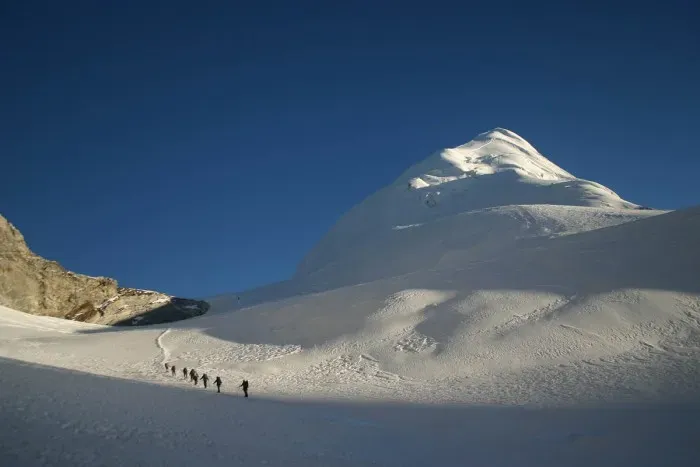
Overview of the Expedition
Rolwaling sits in the Gaurishankar Conservation Area, in the Dolakha district east of Kathmandu, close to the Tibetan border. The valley is long and wild, with forested gorges, high alpine meadows, and one of the largest glacial lakes in Nepal, Tsho Rolpa (about 4,580 m). Ramdung Go and Pharchamo Peak both lie in the upper valley, near the village of Na.
Both peaks are listed as trekking peaks by the Nepal Mountaineering Association, but they are quite different in character:
-
Ramdung Go is the more approachable of the two. The route follows glacier and snow slopes, with moderate technical demands and a rewarding summit panorama over Rolwaling, Gaurishankar, and the Tibetan border.
-
Pharchamo Peak is higher and more technical, with steeper snow and ice, longer exposure, and a more serious summit day.
Climbing Ramdung Go first is a sensible strategy. It adds acclimatization and glacier practice before the more demanding Pharchamo. A typical itinerary lasts 22 to 26 days, including the approach trek, rest days, two summit attempts, and buffer days for weather. Exact routes and details vary between operators, so confirm specifics with your agency.
Why Choose Ramdung and Pharchamo?
Genuine solitude. Rolwaling sees only a small fraction of the visitors who go to Everest or Annapurna. Camps are quiet, trails are lightly used, and you may go days without meeting another group.
Two different climbing experiences. Ramdung Go offers a gentler introduction to glacier and snow climbing, while Pharchamo tests you with steeper slopes and greater commitment. Doing both builds skills quickly.
Spectacular scenery. The valley is framed by Gaurishankar (7,134 m), Melungtse, Chekigo, and Tsoboje. Summit views take in Everest, Cho Oyu, and the wide glacier systems below, and Tsho Rolpa glows a milky turquoise beneath the moraine.
Rich Sherpa culture. Rolwaling is known as the “Beyul” or sacred hidden valley, associated with Guru Rinpoche. You pass monasteries, mani walls, and villages such as Beding, where Sherpa traditions remain strong.
Excellent training value. The combination prepares climbers for larger peaks such as Lobuche East, Chulu East, or 7,000-meter objectives.
Sample Itinerary
Programs differ, but a common plan looks like this.
Kathmandu to Gongar or Singati. A long drive east through terraced hills leads to the Tamakoshi valley, where the trek begins. Roads have extended further up the valley in recent years, so starting points can vary.
Jagat, Simigaon, and Dongang. The trail climbs through subtropical forest, waterfalls, and farmland. Simigaon offers views of Gaurishankar and the first hints of the high mountains.
Sherpa Gaun and Kyalche. Higher up, the forest thins and the path follows the Rolwaling Khola. Trail conditions can be rough here, and porters and guides handle the logistics.
Beding (about 3,700 m). This Sherpa village is the cultural heart of the valley. A rest day allows for acclimatization and time to visit the monastery.
Na (about 4,180 m). Beyond Beding, the valley opens into a wide alpine basin. Na is a summer pasture settlement and the usual staging point for climbing. A rest day and short acclimatization hike to viewpoints above the village are typical.
Tsho Rolpa (4,580 m). An excursion to the glacial lake is a scenic highlight and helps with altitude adaptation. Because the lake is monitored for flood risk, conditions in the area are studied and managed.
Ramdung Go Base Camp and High Camp. From Na, teams move to base camp on moraine and then to a high camp on the glacier or snow slopes. Gear checks and rope practice usually take place here.
Ramdung Go summit day. The climb starts in the early morning, when the snow is firm. The route follows glacier terrain and steeper snow slopes to a summit ridge. Expect roughly 6 to 10 hours round trip, depending on conditions and pace.
Pharchamo Base Camp and High Camp. After a rest, the team turns its attention to Pharchamo. The approach crosses moraine and glacier, and high camp is often situated near the base of the steeper slopes.
Pharchamo summit day. This is a longer and more technical push. The route involves steep snow or ice, fixed ropes on demanding sections, and exposure near the top. Plan for 8 to 12 hours round trip.
Return trek. After descending, the team retraces its route through Beding and Simigaon and drives back to Kathmandu. Some expeditions consider crossing the Tashi Lapcha pass into the Khumbu, but that is a serious glaciated crossing suited only to experienced teams.
Difficulty and Fitness Requirements
This is a strenuous, technical expedition, and only well-prepared climbers should attempt both peaks. Key challenges include:
-
Altitude: Several nights above 4,500 m and two summits near or above 6,000 m.
-
Technical terrain: Glaciers, crevasses, steep snow and ice, and fixed ropes.
-
Remoteness: Long approach, limited services, and few nearby rescue options.
-
Weather: Cold, wind, and rapid changes are common at high camps.
Previous experience is strongly recommended, ideally including a trek above 5,000 meters and a climb such as Island Peak, Mera Peak, or Lobuche East. You should be comfortable using crampons, an ice axe, a harness, and ascenders. If you are new to climbing, arrange a training session with your guides before the first summit attempt.
Begin physical preparation four to six months ahead, focusing on cardio endurance, leg strength, and long hikes with a loaded pack. Stair climbing, running, cycling, and core work all help. Mental resilience matters as much as fitness on long summit days.
Best Time to Climb
The best seasons are spring (April to May) and autumn (late September to November).
-
Autumn offers stable weather, clear skies, and cold, dry snow, making it the most popular window.
-
Spring brings warmer temperatures and longer days, with blooming rhododendrons on the approach, though afternoon cloud and wind can build.
-
Winter is extremely cold, with heavy snowfall that can block trails and passes.
-
Monsoon (June to August) brings rain, leeches, poor visibility, and unstable snow, and it is not recommended.
Permits and Regulations
Your agency will arrange the necessary paperwork, which typically includes:
-
Nepal Mountaineering Association (NMA) climbing permits for each peak
-
Gaurishankar Conservation Area permit
-
Local area or rural municipality permits, where applicable
-
A registered trekking and climbing agency, licensed guides, and support staff
Fees vary by season and rules change over time, so confirm current requirements before departure. Guided travel is strongly recommended because of crevasses, weather, and the remote setting.
Essential Gear
-
Double mountaineering boots suitable for crampons
-
Crampons, ice axe, harness, helmet, carabiners, and ascender
-
Insulated down jacket and a sleeping bag rated to at least -20°C
-
Layered clothing, gloves, balaclava, and glacier sunglasses
-
Trekking poles, headlamp with spare batteries, and water bottles
-
Water purification tablets and a comprehensive medical kit
Most technical equipment can be rented in Kathmandu, reducing luggage weight and cost.
Acclimatization and Safety
Altitude sickness is the primary risk. Ascend gradually, drink plenty of fluids, avoid alcohol, and never ignore symptoms such as persistent headache, nausea, dizziness, or breathlessness. Build rest days into the schedule and be ready to descend if symptoms worsen. Crevasses, avalanches, rockfall, and sudden storms are further hazards, so an experienced guide who assesses conditions daily is essential. Travel insurance should cover helicopter evacuation and climbing up to at least 6,200 meters.
Responsible Climbing
Rolwaling is fragile and remote. Carry out all non-biodegradable waste, avoid single-use plastics, and stay on established routes. Respect Sherpa traditions by walking clockwise around mani walls and stupas, and ask before photographing people or religious sites. Support local lodges and homestays, and make sure guides and porters are paid fairly, insured, and properly equipped.
Conclusion
Ramdung and Pharchamo Peak Climbing offers a rare combination of solitude, technical challenge, and cultural depth. From the forested gorges of the lower valley to the turquoise waters of Tsho Rolpa and the glacier slopes above Na, every stage builds toward two rewarding summits with sweeping views of the Rolwaling and Khumbu Himalaya.
If you are ready to move beyond crowded trails and test your skills in a quieter corner of Nepal, this expedition is an excellent choice. Train thoroughly, choose a reputable operator, allow time for acclimatization and weather, and respect the mountains and their people. You will return with two summits, valuable alpine experience, and memories of a hidden Himalayan valley that few travelers ever see.

